

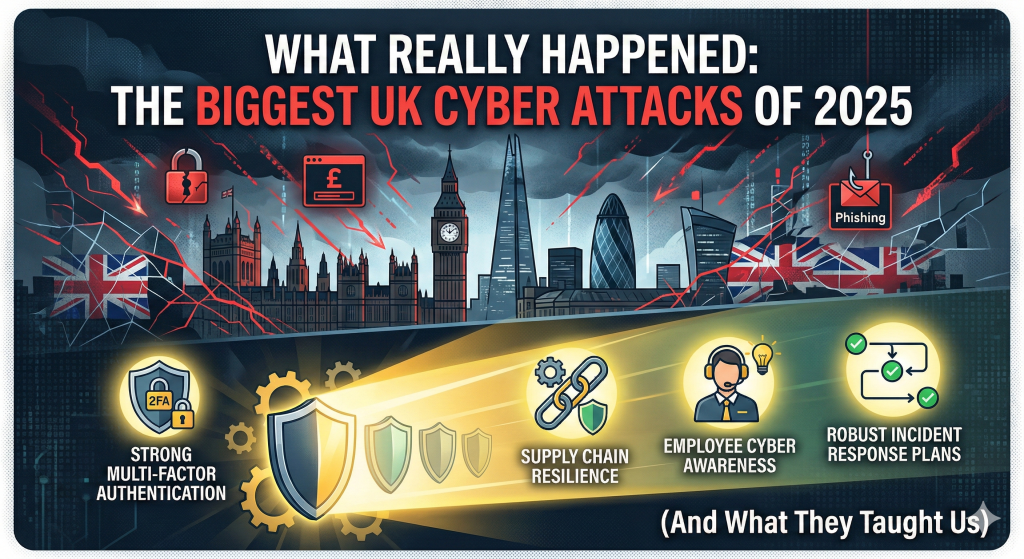
If you were online in 2025, you might’ve felt like something was different. It wasn’t just bad Wi-Fi at home; it was the year cyber attacks moved from tech news into front-page headlines. Big companies, familiar brands, and even supply chains got hit. And that matters for all of us, whether we run a business, work for one, or just use the internet every day.
Here’s a grounded look at the most prominent UK cyber attacks in 2025, what happened, what it meant, and what we can learn from them in plain language.
A Wave of Attacks That Got People Talking
In 2025, cyber incidents didn’t stay in the shadows. They became big business problems. The UK’s National Cyber Security Centre (NCSC) reported 204 “nationally significant” attacks in just 12 months, more than double the year before.
And some of the targets were huge household names.
1. Jaguar Land Rover: Production Shutdown
One of the most talked-about incidents was the cyber attack on Jaguar Land Rover.
Here’s what happened:
- Hackers broke into JLR’s systems and forced the company to pause production at its UK factories for weeks.
- Cars didn’t roll off the line. Shipments got delayed.
- The financial hit was massive, costing hundreds of millions, and some estimates suggest the wider economic impact was over £1.5–£1.9 billion.
Why it mattered: A car company isn’t just a brand. It’s people’s jobs, suppliers’ orders, logistics, and revenue. When production stops, the ripple goes far beyond an office network.
What could’ve helped: Stronger network segmentation (so one system breach doesn’t take everything down), better monitoring to detect unusual activity early, and a tested incident response playbook before things hit the fan.
2. Retail Sector Chaos: Marks & Spencer and Co-op
The UK high street felt the heat too.
At Marks & Spencer, attackers used a social engineering method (like phishing and account compromise) to get into systems tied to an IT contractor. That spiralled into ransomware spreading across hundreds of systems.
For a while, online shopping and contactless payments were offline. Customer data was accessed. Sales stopped.
At the Co-op Group, in-store systems crashed across thousands of locations. Tills went down. Stock tracking paused. Staff had to resort to pen and paper.
Why it mattered: Retail lives or dies on smooth operations. If checkout systems and supply chain tools go down, trust drops fast. People don’t blame tech, they blame the brand.
What could’ve helped:
- Regular phishing awareness and training for staff.
- Multi-factor authentication everywhere.
- Backups and disaster recovery plans that aren’t connected to the same systems.
3. Targeted Data Breaches and Outsider Risks
It wasn’t just big brands on the front pages.
Smaller but serious breaches hit other sectors too, including luxury retail data leaks and third-party supply chain attacks where hackers targeted weaker partners to get into bigger networks.
And it’s not only external hackers we worry about, even in schools, weak passwords and insider access issues also caused breaches as students stumbled into systems they shouldn’t have.
Why it mattered: An attack doesn’t have to be headline-making to hurt you. A breach of sensitive customer info, or an attacker piggybacking off a partner’s weak security, can damage reputation and cost serious money.
So What Does This Mean for Businesses?
2025 made something clear: There’s no such thing as “too small to worry about” when it comes to cybersecurity.
Here are the real lessons that came out of all those stories:
🔐 Defence in Depth Isn’t Optional
No single tool or password keeps you safe. You need layers:
- Firewalls
- Strong access controls
- Regular software updates
- Multi-factor authentication
- Encryption
- Employee training
Think of it like locks, alarms, and neighbours watching your house, all together.
🛠 Test and Prepare Before Something Happens
Too many organisations only take cyber seriously after an outage or breach. If you rehearse your response plans and tighten weak spots early, you reduce panic and loss later.
🧠 People Are Part of the Chain
A huge chunk of attacks start with people. A tricked staff member, a reused password, an unsuspecting contractor. Simple habits like not clicking suspicious links and using unique passwords make a big difference.
🤝 Cybersecurity Is Everyone’s Job
From the CEO to the summer intern, security isn’t just for the tech team. Everyone touches something digital every day.
What It Means for You and Me
You might be thinking: “This sounds like big companies’ problems.”
But here’s the thing: the same behind-the-scenes issues apply to individuals, too.
- Weak passwords? Easy targets.
- Clicking links without thinking? That’s how many attacks start.
- Using the same login on multiple sites? It’s tempting, but risky.
Whether you’re a business owner or just someone checking email, the takeaway is simple:
Good cyber hygiene is like brushing your teeth. You do it every day, so things don’t go bad suddenly.
Final Thought
2025 was a wake-up call for the UK. Cyber threats don’t wait for permission, and they don’t only hit tech giants. They hit companies you shop at, workplaces you know, and systems all around us.
But we don’t have to be helpless. Awareness, reasonable habits, and good security basics help protect you and make the digital world a bit safer for everyone.
 English